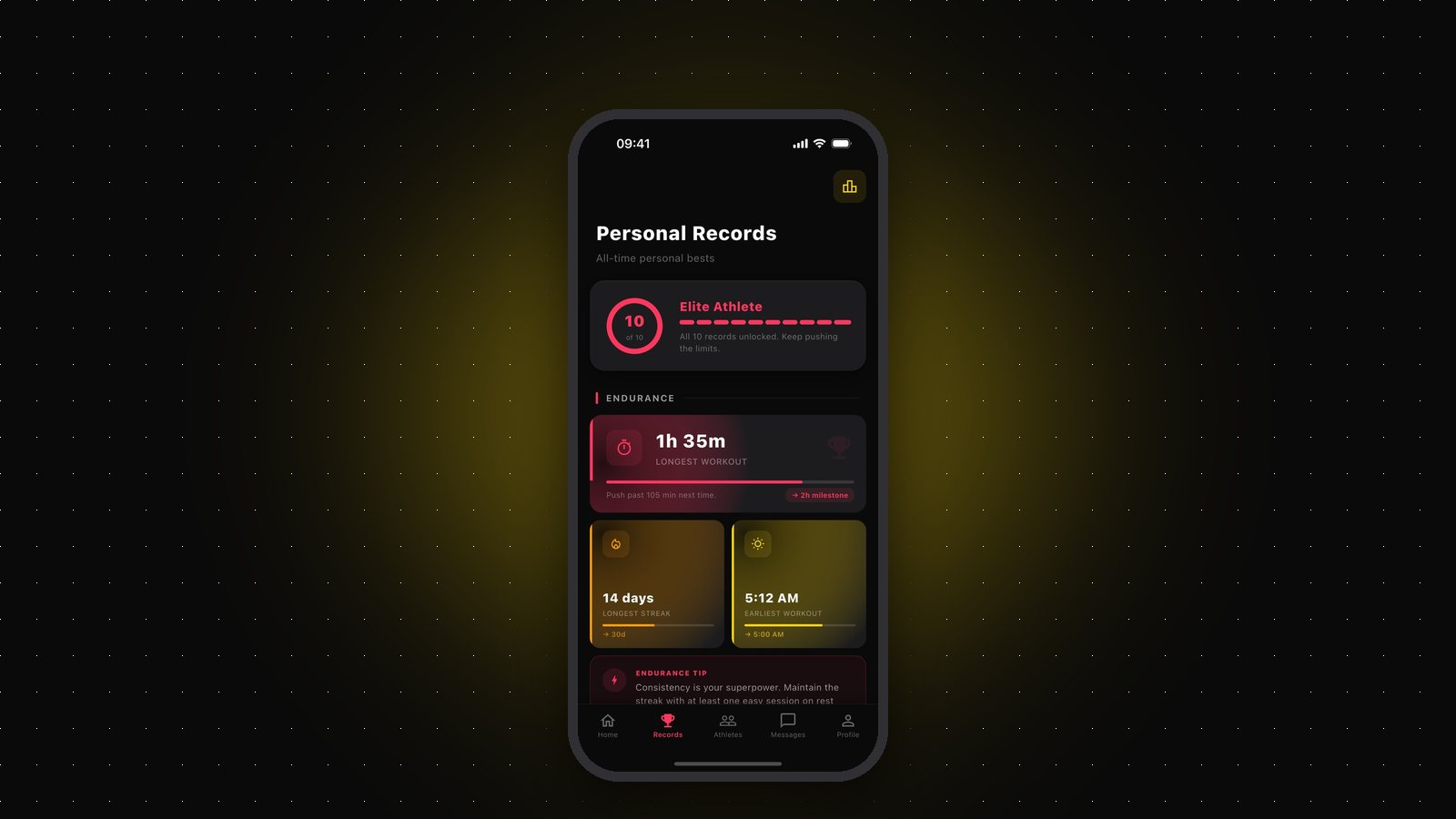
Gritvit is a fitness-verified dating app first, but there's a competitive layer built in too: a global leaderboard for personal records, free for everyone, where members stack their best efforts against everyone else's.
Fitness leaderboards aren't new — what's different here is what feeds this one. On Gritvit, there is no manual logging anywhere in the system, which changes what a ranking actually means.
The problem with most fitness leaderboards
Any leaderboard built on self-reported activity has the same flaw: the top of the table rewards whoever logs most aggressively, not whoever trains most honestly. Everyone who has joined a step challenge knows the pattern — suspicious entries appear, trust evaporates, and the honest participants quietly stop caring.
A competition is only as motivating as it is credible. The moment you suspect the person above you didn't earn their spot, the game stops working.
What makes Gritvit's different
Gritvit's leaderboard inherits the verification that runs through the whole app. Every piece of activity behind it arrives through Apple Health — an Apple Watch session, a Garmin ride, a Fitbit workout, a phone-GPS run. There is no field where anyone can type a workout into existence.
Each personal record gets its own global board with a top-3 podium: longest workout, best day of steps, best week of steps, most workouts in a week, longest active streak, earliest workout, best day of calories, longest run, longest ride, and farthest day on foot. So the leaderboard isn't a mix of athletes and typists — it's verified members, compared on verified data.
Why consistency is the real competition
Some records reward a single big effort — the longest ride, the farthest day on foot. But several of them reward showing up: longest active streak, most workouts in a week, best week of steps. And Gritvit's core signal, the Fitness Score, decays when you stop — miss enough days and it drops. You can't bank one heroic week and coast.
That mix makes the leaderboard a better game than a raw-volume contest. One-off feats are impressive; repeated weeks are character. Boards that favor consistency reward the exact habit that fitness is actually built on — and the one worth signaling to a community of people who train.
Competition as an accountability tool
The practical value of a leaderboard isn't the top spot — most people will never hold it, and that's fine. The value is ambient accountability. Knowing your training feeds a visible number, in a community where everyone's numbers are real, is a quiet extra reason to get the session in on a low-motivation day.
Use it that way: pick someone slightly ahead of you and keep pace, or just defend your own position against last month's you. On a board where nothing can be faked, every place you hold is one you earned — which is the only kind of ranking worth caring about.